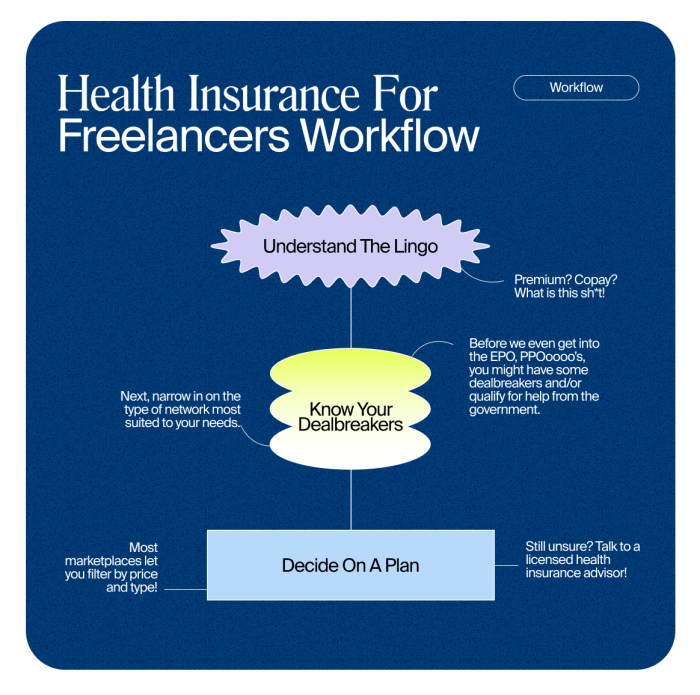
Delve into the world of Health Insurance for Freelancers, where access, costs, providers, and policies intertwine to shape a crucial aspect of freelance life. Unravel the complexities and discover key insights in this comprehensive guide.
Explore the challenges freelancers face in navigating the realm of healthcare, from accessing affordable services to managing costs effectively.
Healthcare Access

As freelancers navigate the world of self-employment, one critical aspect that often poses a challenge is access to healthcare services. Unlike traditional employees who may have employer-sponsored health insurance, freelancers must find alternative ways to secure affordable healthcare.
Challenges in Accessing Affordable Healthcare
- High Costs: Freelancers often face high premiums and out-of-pocket expenses when purchasing health insurance on their own.
- Limited Options: The lack of employer-sponsored plans can limit the choices available to freelancers, making it difficult to find comprehensive coverage.
- Pre-existing Conditions: Some freelancers with pre-existing health conditions may struggle to find affordable coverage or may face exclusions for specific treatments.
Strategies to Improve Healthcare Access for Freelancers
- Join Freelancers’ Associations: Some freelance associations offer group health plans that can provide more affordable coverage options.
- Health Savings Accounts (HSAs): Setting up an HSA allows freelancers to save pre-tax dollars for medical expenses, helping to offset the costs of healthcare.
- Telemedicine Services: Utilizing telemedicine services can provide freelancers with convenient and cost-effective access to healthcare professionals for minor medical issues.
- Research Government Programs: Freelancers can explore options like Medicaid expansion or subsidies through the Affordable Care Act marketplace to find more affordable coverage.
Healthcare Costs
Healthcare costs can be a significant concern for freelancers who do not have health insurance. Without coverage, freelancers may face higher out-of-pocket expenses for medical services, prescriptions, and other healthcare needs.
Comparing Costs
- Freelancers often have to pay the full cost of healthcare services, which can be much higher than the copays or deductibles required with employer-sponsored insurance.
- Prescription medications can also be more expensive without insurance, as freelancers may have to pay the retail price rather than a discounted rate negotiated by an insurance company.
- Emergency room visits and hospital stays can result in substantial bills for freelancers without insurance, leading to financial strain.
Tips for Managing Healthcare Expenses
- Research and compare healthcare providers to find affordable options in your area.
- Consider joining a healthcare sharing ministry or purchasing a short-term health insurance plan to help cover unexpected medical costs.
- Set aside a portion of your income each month for healthcare expenses, creating a dedicated healthcare fund to cover future needs.
- Utilize telemedicine services for minor illnesses or consultations to save on in-person medical visits.
- Regularly review your healthcare spending and adjust your budget as needed to ensure you can afford necessary medical care.
Healthcare Providers
When it comes to healthcare providers, freelancers have a variety of options to choose from to meet their medical needs.
Types of Healthcare Providers
Freelancers can opt for different types of healthcare providers based on their preferences and requirements. Some common options include:
- Primary Care Physicians (PCPs): These doctors serve as the first point of contact for general healthcare needs and can provide referrals to specialists if necessary.
- Specialists: Healthcare professionals who focus on specific medical areas such as cardiology, dermatology, or orthopedics.
- Urgent Care Centers: Facilities that provide immediate medical attention for non-life-threatening conditions outside regular office hours.
- Telemedicine Services: Virtual healthcare platforms that allow freelancers to consult with healthcare providers remotely.
Building Relationships with Healthcare Providers
Establishing a good relationship with healthcare providers is crucial for freelancers to receive personalized care and timely medical assistance. By communicating openly with their providers and sharing their health concerns, freelancers can ensure that their healthcare needs are met effectively.
Finding Quality Healthcare Providers Within Budget
Freelancers can find quality healthcare providers within their budget by exploring different options such as:
- Researching Healthcare Networks: Choosing providers within preferred insurance networks can help freelancers save on out-of-pocket costs.
- Utilizing Preventive Services: Regular check-ups and preventive care can help freelancers avoid costly medical expenses in the long run.
- Seeking Affordable Alternatives: Freelancers can consider community health centers or sliding-scale clinics for affordable healthcare services.
Health Insurance
Health insurance is crucial for freelancers as it provides financial protection in case of unexpected medical expenses. Without health insurance, freelancers may end up facing high costs for healthcare services, putting a strain on their finances.
Health Insurance Options for Freelancers
Freelancers have several options when it comes to health insurance:
- Marketplace Plans: Freelancers can explore health insurance options through the health insurance marketplace, where they can compare different plans and choose one that suits their needs and budget.
- Private Insurance: Freelancers also have the option to purchase health insurance directly from private insurance companies. While this may offer more customization, it can be more expensive than marketplace plans.
Tips for Selecting the Right Health Insurance Plan
When selecting a health insurance plan as a freelancer, consider the following tips:
- Assess Your Needs: Evaluate your healthcare needs, including any existing medical conditions or prescriptions, to choose a plan that provides adequate coverage.
- Compare Costs: Compare premiums, deductibles, and out-of-pocket costs to find a plan that fits your budget without compromising coverage.
- Check Network Coverage: Ensure that your preferred healthcare providers are in-network to avoid additional costs for out-of-network services.
- Consider Additional Benefits: Look for plans that offer additional benefits such as telemedicine services, wellness programs, or prescription drug coverage to maximize your healthcare coverage.
Health Policies
Freelancers need to be aware of key health policies, such as the regulations set forth by the Affordable Care Act (ACA). Changes in health policies can have a significant impact on freelancers’ access to healthcare, so staying informed is crucial. Not having health insurance can also have serious implications in relation to health policies, potentially leading to financial strain and limited healthcare options.
Impact of Health Policies on Freelancers
- Changes in health policies can affect the availability and affordability of health insurance options for freelancers.
- Policy changes may also impact the benefits and coverage provided by health insurance plans, potentially leading to gaps in coverage for freelancers.
- Understanding health policies can help freelancers navigate the healthcare system more effectively and make informed decisions about their coverage.
Importance of Having Health Insurance
- Health insurance is essential for freelancers to protect against unexpected medical expenses and ensure access to necessary healthcare services.
- Without health insurance, freelancers may face barriers to receiving timely and adequate medical care, leading to potential health complications.
- Having health insurance can provide freelancers with peace of mind knowing that they are covered in case of illness or injury.
Health Records
Maintaining accurate health records is crucial for freelancers to ensure they have a complete history of their health conditions, treatments, and medications. This information can be valuable for healthcare providers in making informed decisions and providing appropriate care.
Importance of Health Records
- Health records help freelancers track their medical history, including past illnesses, surgeries, and allergies.
- Having organized health records can lead to more effective communication with healthcare providers, reducing the risk of medical errors.
- Accurate health records can aid in timely diagnosis and treatment of any health issues that may arise.
Secure Methods for Storing Health Records
- Utilize secure online platforms or apps designed for storing health information, ensuring data encryption and password protection.
- Consider using encrypted USB drives or password-protected files to store electronic health records.
- Keep physical copies of important health documents in a safe and easily accessible location, such as a locked file cabinet.
Role of Health Records in Healthcare Decision-Making
- Health records provide a comprehensive view of an individual’s health status, helping healthcare providers make informed decisions on treatment plans.
- Access to accurate health records can lead to personalized care tailored to the specific needs and medical history of freelancers.
- By sharing health records with healthcare professionals, freelancers can actively participate in their care and treatment decisions.
Health Screening
Regular health screenings are crucial for freelancers to maintain their well-being and detect any potential health issues early on. By prioritizing health screenings, freelancers can take proactive steps to address any health concerns and prevent more serious conditions in the future.
Essential Health Screenings for Freelancers:
- Blood Pressure: Regular monitoring of blood pressure levels can help prevent heart disease and other related complications.
- Cholesterol Levels: Checking cholesterol levels can help in assessing the risk of heart disease.
- Blood Sugar: Monitoring blood sugar levels is essential for early detection of diabetes.
- Body Mass Index (BMI): Calculating BMI can indicate if an individual is at a healthy weight.
- Eye Exam: Regular eye exams can detect vision problems and other underlying health issues.
- Dental Check-up: Dental screenings are important for maintaining oral health and preventing dental problems.
- Annual Physical Exam: A comprehensive physical exam can help in evaluating overall health and detecting any abnormalities.
Contribution of Health Screenings to Preventive Healthcare Practices:
Regular health screenings play a vital role in preventive healthcare for freelancers by enabling early detection of potential health issues. By identifying health problems at an early stage, freelancers can take necessary steps to manage their health effectively and prevent the progression of diseases. Health screenings empower freelancers to make informed decisions about their well-being and adopt a proactive approach towards maintaining a healthy lifestyle.
In conclusion, Health Insurance for Freelancers not only ensures financial security but also peace of mind. By understanding the nuances of this vital aspect, freelancers can make informed decisions to safeguard their well-being.
Questions Often Asked
What are the options for freelancers to access healthcare services without traditional employer-sponsored insurance?
Freelancers can explore marketplace plans, private insurance, or consider health sharing ministries as alternative options.
How can freelancers manage and budget for healthcare expenses effectively?
Freelancers can set aside a portion of their income for healthcare, negotiate prices with providers, and utilize health savings accounts.
Why is it important for freelancers to maintain accurate health records?
Accurate health records aid in better decision-making, provide a comprehensive health history, and assist in coordinating care with healthcare providers.


